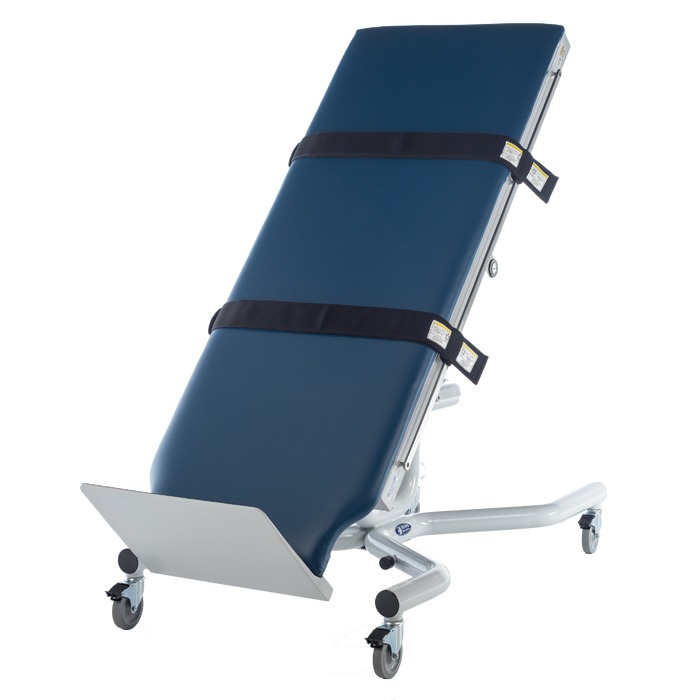
An electric tilting board is a motorized rehabilitation tool designed to safely move patients from a horizontal lying position to a vertical standing position (0 to 90 degrees). It is used in physiotherapy to assist patients with limited mobility—such as those with spinal cord injuries, stroke, or cerebral palsy—in regaining cardiovascular stability, improving blood circulation, and preventing osteoporosis.
Key Features & Uses
- Rehabilitation: Helps patients with bedsores, joint contractures, and vertigo by allowing vertical weight-bearing.
- Operation: Motorized control allows gradual adjustment to any angle between horizontal and vertical, often with hand-held, wireless remote controls.
- Safety Features: Includes multiple safety belts (thorax, arm, and leg) to secure the patient, along with adjustable footrests.
- Design: Usually features a cushioned, comfortable bed surface, heavy-duty metal frame, and locking casters for mobility.
- Capacity: Often supports significant weight, with some models designed for bariatric patients up to 500kg



Reviews
There are no reviews yet.